Licensing Agreements
What is a Licensing Agreement?
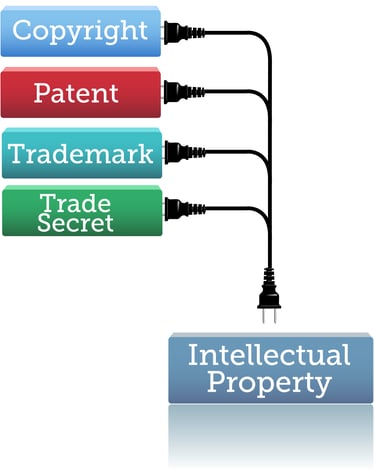
A licensing agreement is a formal contract where the owner of intellectual property (IP), such as a patent, trademark, copyright, trade dress, or industrial design, grants permission to another party to use, manufacture, sell, or otherwise exploit that IP, usually in exchange for fees and/or royalties.
Licensing agreements can cover all types of IP assets, including new technologies, software, brand names, logos, product designs, and creative works. These agreements outline the terms and conditions for using the IP, helping to prevent disputes and ensuring the IP owner maintains control over how their work is used.
Why are Licensing Agreements Important?
For creators, innovators, and businesses of all sizes, licensing agreements provide a strategic method to commercialize valuable assets without relinquishing ownership. A well-drafted licensing agreement enables a licensor to:
· Earn income by permitting others to use its IP.
· Expand into new markets with minimal investment.
· Collaborate with partners while safeguarding their rights.
· Maintain control over the use of its creations.
· Reduce its risks by clearly establishing boundaries and defining responsibilities.
Without a well-structured licensing agreement, you risk unauthorized use of your IP, losing control over your brand or ideas, and missing out on potential financial opportunities.
Having a strategically minded legal team is essential for navigating complex agreements related to in-licensing, out-licensing, and technology transfer opportunities across both domestic and international industries.
In-licensing occurs when a company acquires the rights to use another company’s product or technology, while out-licensing takes place when a company grants rights to another company to use its product or technology.
In-licensing is often used to expand a company’s pipeline or access new markets, while out-licensing enables a company to monetize its innovations and reach new markets through partners. In both approaches, the aim is to leverage IP and achieve business goals.
What We Do
At Kramer International Law, we support businesses, innovators, and creators in maximizing their IP’s full potential through well-designed licensing agreements. Whether the law of the US, Canada, the UK or elsewhere is involved, a clear and effective licensing agreement can be essential for growing your business, safeguarding your rights, and opening up new revenue opportunities.
We are familiar with the commercial and legal factors involved in licensing various IP across multiple jurisdictions and industries. Whether you are licensing your innovation to a manufacturing partner, allowing a brand extension into new markets, or protecting your new technology in an international collaboration, we offer tailored, commercially focused guidance aligned with your objectives.
Our licensing practice organizes comprehensive licensing transactions by examining the technology’s life cycle, its potential applications to other fields, as well as market trends.
Whether you are a small business, an emerging entity, or a global industry leader, licensing your IP can generate a significant income stream and constitutes a way to leverage the value of your technology and innovations. We endeavor to secure appropriate terms for IP assets our clients seek to in-license, out-license, acquire, or divest.
At Kramer International Law, we can assist you in developing and maximizing your IP portfolio through negotiating and drafting licensing agreements related to trademark, copyright, patent, trade secret, and know-how, as well as brands, trade dress, industrial design, content, data, databases, and software.
Our services and areas of expertise include:
· Drafting and advising on appropriate IP licensing grants.
· Assessing antitrust issues and alternative deal arrangements.
· Drafting dispute resolution clauses and agreements.
· Counselling on potential insolvency issues related to agreements.
· Counselling on asset acquisition and sale, including transactions involving bankruptcy.
· Facilitating connections with other service providers, technology buyers, brokers, and financing sources.
· Licensing and technology transfer both domestically and internationally.
· Transferring technology from government-supported operations and academic organizations to private sector companies.
· Providing advice on confidentiality agreements, non-competition agreements, and similar contracts.
· Reviewing a target company's IP portfolio and licensing agreements to identify potential acquisition risks and relevant considerations.
· Managing licensing disputes, conducting due diligence, addressing IP infringement, and dealing with counterfeiting and diversion issues.
Our boutique international firm understands the significant benefits an IP license can provide. We combine business and legal expertise in IP licensing to anticipate potential issues and safeguard your business.
Types of Agreements We Draft
We prepare, among other documents, the following agreements:
· Agreements concerning trademarks, copyrights, patents, and trade secrets for both domestic and international use.
· Software licenses and development agreements.
· Agreements regarding the use and licensing of internet and domain names.
· Agreements related to source code escrow.
· Agreements regarding leasing and purchasing hardware.
· Agreements regarding computer services and outsourcing.
· Support and maintenance agreements.
· Representations, warranties, special indemnities, and other key IP provisions in purchase agreements.
· Licenses related to biotechnology.
· OEM agreements.
· Agreements concerning the co-development and licensing of pharmaceuticals.
· Dealership agreements.
· Reseller agreements.
· Vendor distribution forms.
· Agreements with manufacturer representatives.
· Secured transactions respecting IP.
We also provide consulting services to our clients for reviewing license agreements drafted by other lawyers. In each case, we modify or adapt the agreement with an understanding of and focus on the client's unique business needs and objectives.
Representing Both Licensors and Licensees
At Kramer International Law, we represent both licensors and licensees in matters related to intangible assets and associated IP rights.
We understand the core business and legal interests of both owners/licensors and licensees, which are often aligned but can sometimes differ depending on the nature of the licensed asset, its potential uses, commercialization, and the economic and timing considerations of the parties.
Components of License Agreements
A license agreement consists of many components that together form a complete agreement. Each part of the license agreement can be negotiated independently and, depending on whether you are the licensor or the licensee, as well as your respective bargaining power, will factor into how strongly you can push for a more favorable license.
Here are the main components of most license agreements (not only are each of these negotiable, they are also non-mandatory; that is, a license may or may not include each one of these):
Exclusivity
A license can be either “exclusive” or “non-exclusive,” depending on whether the rights holder wants to allow only one, or multiple, persons or entities to use the IP covered by the license.
Typically, an “exclusive” license involves the licensee paying a higher fee to the licensor and having the right to enforce the IP rights against infringers in the licensee's name. On the other hand, a “non-exclusive” license generally requires the licensor to handle infringement litigation in their own name. Nonetheless, both parties can agree to share expenses of and proceeds from enforcement actions, depending on the terms outlined in the license agreement.
License Fee
Some licenses require the licensee to pay an upfront fee (“license fee”) to initially acquire a license. In some cases, that up-front license fee is credited against royalties earned from sales, while in others it is paid in addition to the royalties earned.
Royalties
Royalties can be either a percentage of the selling price of each unit or a fixed amount of money per unit sold. Sometimes, a specific license may require payment of a fixed amount by way of royalty, which may or may not be based on the actual number of sales of the licensed product. Usually, royalties are owed based on the number or value of sales within a certain period and must be accompanied by a royalty report that details how many units were sold, at what price, how many returns there were, and any other factors that could influence the calculation of the royalty owed.
Guaranteed Royalties
Royalties normally are payable when sales are made. That, however, can lead to a situation in which the licensee locks up the rights to the licensor’s product, but then does not make any actual sales. To avoid that situation, some licenses require that the licensee pay to the licensor a “guaranteed royalty”, which is usually a “guaranteed minimum royalty”, that is, that whatever is paid as a “guaranteed minimum royalty” is credited against the actual royalties that may be earned, and any additional earned royalties must be paid in addition to the “guaranteed minimum royalty.” They might be due monthly, quarterly, or annually, or otherwise.
Sub-licenses
A license may grant the licensee the option to “sub-license”. If sub-licensing is allowed, the license specifies whether the licensor will benefit from each sub-licensee’s sales individually or only from the licensee’s total sales. There may or may not be a direct contractual relationship between the licensor and the sub-licensee, and there could be conditions like territorial limitations or permissions to further sub-license the IP rights.
We recognize that our clients have a wide range of reasons for licensing or transferring IP rights. Since there’s no universal solution, our approach varies from simple agreements like intra-group assignments to more complex licenses involving multiple IP rights and countries, often concerning key business technologies.
Advantages of Licensing
Licensing offers numerous benefits, such as:
· Managing who has access to the product or process.
· Limiting where and how a product or process is used.
· “Field of use” restrictions relating to the particular segment of the industry where a licensee is permitted to sell products.
· Restricting a software license to a single user and requiring a licensing fee when the license is transferred.
Our Licensing Services
We are prepared to assist you in developing strong, effective licensing agreements that support your business goals and protect your future success.
We structure, negotiate, and draft IP license agreements, drawing on litigation experience with such agreements, including IP credit and security agreements, IP transfer agreements, manufacturing and distribution agreements, software and technology licensing agreements, and various other commercial agreements involving IP rights.
As a licensee, licensing agreements allow the use of third-party IP that would otherwise be unavailable, saving you time, hassle, and expenses on research and development.
Since we practice the laws of the US, Canada, and the UK, we are well-prepared to handle cross-border licensing and provide guidance on how IP license agreements should be understood across different jurisdictions.
We collaborate with clients to understand both the IP rights involved and the commercial drivers behind each deal.
Where necessary, we work closely with patent or trademark lawyer colleagues who can bring specialized input. We can also access a network of trusted foreign lawyers when advice on local issues is needed. This blend of skills and resources allows us to offer a responsive, all-in-one solution for IP licensing and assignment needs.
Our licensing services include the following sectors:
· High tech.
· Computers, software and information technology.
· Telecommunications.
· Electronics and electrical.
· Robotics.
· Oil and gas.
· Alternative energy.
· Mining and metals.
· Transportation and utilities.
· Automotive.
· Aerospace and defense.
· Retail.
· Luxury goods and apparel.
· Industrial and mechanical.
· Renewable energy, water management, and energy efficiency.
· Life sciences.
· Pharmaceuticals and medical devices.
· Crop science.
· Chemical and industrial biotechnology.
· Consumer products.
· Sporting goods.
· Financial services.
· Entertainment.
· Media and broadcasting.
· Food and beverages.
Our Approach
We advocate tirelessly for our clients throughout all stages of a transaction. Our approach involves managing IP-related due diligence and collaborating with clients to identify potential solutions before progressing to the next phase of the deal.
Standalone IP Transactions
We represent clients in standalone IP transactions, including acquisitions, investments, licenses, strategic alliances, collaborations, joint ventures, technology transfer agreements, and royalty buy-outs. We perform due diligence for both investors and companies, negotiate deal terms, advise on the potential effects of pending or threatened third-party disputes, and prepare documents for various transactions.
Strategic Commercial Agreements
Furthermore, we advise our clients on a wide range of additional commercial contracts, such as marketing and distribution agreements, service agreements, as well as clinical, supply, and manufacturing agreements.
Name, Image, and Likeness Agreements
We possess a thorough understanding of the issues and considerations surrounding the right of publicity and the right to privacy in relation to using a person’s name, image, and likeness in branding. We advise clients on licensing matters related to rights of publicity.





Boutique International
Business Law Firm
Providing international business law services respecting the law of the US, Canada, and the UK
E: info@kramerintlaw.com
T (US): + 1 (347) 588-4060, Ext. 1010
© 2025 Kramer International Law.
T (Can): + 1 (514) 470-0717, Ext. 1010
The information on this website is for general information purposes only. Nothing on this site should be taken as legal advice for any particular case or situation. This information is not intended to create, and receipt or viewing does not constitute, an attorney-client relationship. Attorney Advertisement.

CONTACT FORM
T (UK): + 44 20 3996 9356, Ext. 1010