
Sales, VAT & Commodity Taxes
Many businesses depend on importing and exporting goods and cross-border service delivery to stay competitive in a global market. Sales, VAT, and commodity taxes generate significant revenue for governments, but can greatly impact business profitability.
Kramer International Law offers sales, VAT, and commodity tax services to clients in accordance with the laws of Canada and England & Wales.
We deliver practical advice to clients faced with unique sales, VAT, and commodity tax issues. We might be asked by manufacturers, retailers, distributors, importers, exporters, financial institutions, service providers, and others to review contracts and arrangements and to offer compliance and planning expertise.
Kramer International Law adopts a practical, results-focused approach when offering advice, helping clients understand their tax responsibilities, obligations, and liabilities. We assist in creating tax-efficient strategies to reduce duties and taxes and structure clients’ affairs to prevent compliance issues. Additionally, we provide timely, relevant information so clients can maximize profits, reduce risks, manage cash flow, seize new opportunities, and address challenges.
Our team also helps clients with voluntary disclosures, audits, objections, appeals, investigations, document production requirements, payment obligations, assessments, and collection matters.
We serve a variety of entities, including privately-owned companies, public companies, and multinationals across diverse industries such as charities and non-profit organizations, third-party logistics and transportation, retail, e-commerce, direct sales, oil and gas, mining, construction, real estate, manufacturing, and the MUSH sector, which includes municipalities, universities, school boards, and hospitals.
Whether you require tax-planning advice, a negotiated settlement with tax authorities, or resort to the courts, we can assist.
CANADA
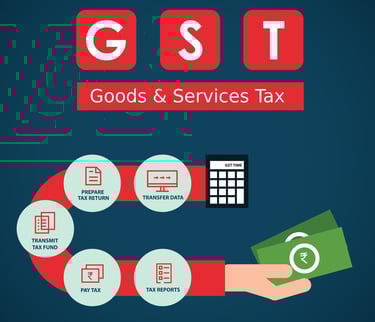
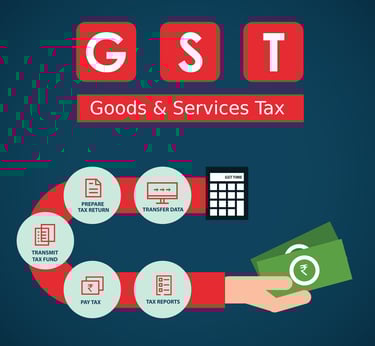
Canada’s value-added sales tax is the Goods and Services Tax (GST) of 5%, which is charged as the Harmonized Sales Tax (HST) in those provinces that have harmonized their provincial sales tax with the GST (Ontario, New Brunswick, Newfoundland and Labrador, Nova Scotia, and Prince Edward Island).
The term "commodity tax" in Canada typically refers to consumption-based taxes like the GST and HST, provincial sales tax or retail sales tax (PST/RST), the Quebec Sales Tax (QST) in the province of Quebec, as well as other excise taxes and duties.
We advise on the federal GST and HST, as well as applicable separate provincial sales taxes, to ensure that transactions are structured adequately from a GST/HST and provincial sales tax perspective and that these tax implications are considered when selling business assets. We also help clients with their obligations regarding registration, tax collection and remittance, GST/HST ruling requests, voluntary disclosures, tax audits, objections, and appeals.
Certain excise taxes and special levies are imposed at both the federal and provincial levels of government across Canada. In addition to GST/HST and provincial sales tax, we advise on more specialized tax regimes, such as insurance premium tax under the federal Excise Tax Act and various provincial statutes.
We advise clients on the application of various provincial sales and commodity tax regimes, including commodity-specific taxes on tobacco, fuel, and gasoline, as well as federal-level commodity taxes such as excise duties on the manufacture of certain types of alcohol and tobacco.
Goods imported into Canada for commercial purposes are subject to the GST or the federal part of the HST, except for items deemed to be non-taxable importations. The GST or the federal part of the HST is calculated based on the Canadian dollar value of the goods, including any applicable duty and excise tax. It is generally collected at the time of importation along with duty and excise taxes.
Our sales, VAT, and commodity taxes practice offers the reliable advice and innovative solutions you need to understand your tax liabilities and compliance obligations while managing and reducing their impact on your operations.
We offer legal advice and representation regarding various sales, commodity, and other indirect taxes, including:
· Federal goods and services tax / harmonized sales tax (GST/HST).
· Provincial/retail sales tax (PST/RST).
· Quebec sales tax (QST).
· Excise tax.
· Underused housing tax (UHT).
· Property transfer tax (PTT) / land transfer tax (LTT).
· Luxury tax.
· Property assessment tax.
· Home flipping tax.
· Fuel and gasoline tax.
People involved in even the simplest of commercial or cross-border transactions can face a range of complex GST/HST issues, which can sometimes lead to the application of GST or GST and HST under one or more of Divisions II, III or IV of the Excise Tax Act, and at other times, with proper structuring, can result in no GST or HST being imposed.
We negotiate on your behalf with the relevant federal or provincial authorities to ensure that your sales and commodity tax liabilities are minimized. We take every possible measure to avoid costly, lengthy litigation.
Contesting tax liabilities is just part of what we do for clients. We also provide advice on planning tax-efficient transactions. We can assist you in reducing the sales tax when acquiring assets or property. If your company operates in multiple provinces, we can guide you on managing sales and commodity taxes in each jurisdiction.
As a registrant for the GST or HST, you can typically recover the GST or HST paid or payable on taxable property and services by claiming input tax credits (ITCs).
As a registrant for the QST, you can generally recover the QST paid or payable on taxable property and services by claiming input tax refunds (ITRs).
The term "inputs" refers to property or services used or consumed in your business activities.
ENGLAND & WALES
Value Added Tax (VAT) is a transaction-based tax in England & Wales with intricate rules that differ by sector, region, and transaction type.
Mastery of VAT law is essential for a business's success. With the current standard VAT rate of 20%, VAT is a significant cash flow item for businesses, even when it can be recovered (reclaimed). If VAT cannot be reclaimed, it represents a substantial fixed cost. Therefore, making correct VAT decisions is crucial, particularly when establishing a new business structure.
Unless exempt, VAT applies to all transactions involving goods or services in the UK. We clarify where, when, and how much VAT applies, and how to structure commercial transactions to minimize VAT as much as possible.
Your business can face serious penalties for not charging VAT when it must be charged, and it may incur unnecessary costs if it doesn’t know how to claim back the VAT it paid.
We carefully monitor developments to keep you informed about when VAT changes might impact your business and prevent unintended VAT liabilities.
We provide VAT advice within the broader context of a transaction's overall tax implications. This approach ensures that any VAT solutions do not result in adverse direct tax consequences, such as in transfer pricing scenarios or through the inadvertent establishment of a “permanent establishment”.
At Kramer International Law, we take the time to develop an in-depth understanding of your business and its tax responsibilities, helping to navigate a wide range of UK VAT matters, including domestic UK issues and cross-border matters.
We advise on the VAT implications of transactional matters. We also offer assistance with VAT disputes and negotiating settlements.
Our VAT services include:
· Determining whether a business must register for VAT.
· Determining whether VAT is applicable in a specific situation and, if so, what rate of VAT applies.
· Performing due diligence.
· Identifying ways to save money on VAT, if applicable.
· Determining whether VAT may be reclaimed.
· VAT in international and cross-border transactions.
· Applying VAT to goodwill and other intellectual property.
· VAT for corporate groups.
· VAT and business transfers.
· VAT and charities.
· VAT and outsourcing arrangements.
· VAT and non-business use of assets.
· VAT and insolvency.
· VAT and compensation payments, such as when litigation is settled out of court.
· Managing VAT penalties and resolving disputes.
· VAT support during His Majesty's Revenue and Customs (HMRC) investigations, reviews, tribunal appeals, and compliance challenges.
The VAT treatment of real estate transactions, which is a complex area, can involve a choice about whether to charge VAT. The seller or landlord needs to understand the implications of not charging VAT.
At Kramer International Law, we offer clear and practical legal advice on all aspects of VAT law. We assist clients in navigating one of the most complex areas of tax law, ensuring that their VAT obligations are met efficiently and confidently.
VAT Registration
You must register for VAT if your taxable turnover exceeds £90,000 over the past 12 months, or if you expect it to go over that threshold within the next 30 days.
You’ll also need to register for VAT regardless of turnover if all of the following apply:
· You are based outside of the UK;
· Your business is based outside the UK; and
· You supply goods or services to the UK or plan to do so within 30 days.
This applies to non-established taxable persons (NETPs) with overseas businesses trading in the UK.
Even if you don’t meet the threshold for registration, you can choose to voluntarily register for VAT, which may enable you to reclaim VAT on business expenses.
You don’t need to register for VAT if you only sell VAT-exempt or “out of scope” goods and services.
After registration, you will be accountable for accurately charging VAT and submitting any owed VAT to HMRC.
Some methods simplify processes, such as avoiding complex VAT calculations or making them more practical. There are also exceptions where VAT registration can be avoided. Planning a project to balance these benefits can help save time and money.
VAT Investigations
HMRC will review a business to verify its VAT records and liabilities. This occurs regularly or more frequently if HMRC has concerns, or when there is a specific question HMRC wants answered.
VAT Penalties
HMRC has various methods to penalise businesses for contraventions such as failing to notify HMRC of obligations (like timely VAT registration), not submitting VAT returns or paying VAT on time, making errors in calculating VAT liabilities on sales or recovery on purchases, or combining these errors with deliberate or evasive actions.
A taxpayer can also be charged interest on VAT that HMRC considers was not received on time.
There are methods to reduce or avoid penalties, but starting with the right approach early on will usually yield the best results.
VAT Planning
As your business evolves, VAT planning can present opportunities to reduce tax and boost cash flow. However, VAT legislation is complex and often changing, with significant implications for your business.
We help ensure the VAT impact of any restructure is properly considered and advise you on the most VAT-efficient options.
Import VAT Accounting
In the UK, there are two options for handling import VAT accounting. Upon arrival of goods at the border, you will either be charged import VAT immediately by customs (with couriers paying on your behalf and then recharging you), or you can opt for what is called Postponed VAT Accounting (PVA).
PVA is a system that enables businesses to declare and reclaim import VAT on their VAT return instead of paying it upfront at the point of import. This mechanism mainly aims to improve cash flow and reduce administrative burdens for importers.
With PVA, instead of paying VAT immediately at customs, the VAT is recorded using a reverse charge mechanism on the business's regular VAT return. This usually results in a nil net cash effect for fully taxable businesses, as the amount declared as payable (output VAT) is also reclaimed as deductible (input VAT) on the same return.
VAT Services We Provide at Kramer International Law
Our boutique international law firm is well-equipped to manage VAT strategies, combining a global perspective with an understanding of local jurisdiction regulations.
Working across a range of VAT-sensitive sectors, we provide practical solutions and optimize tax efficiency for your business.
We can provide you with standalone structuring advice and handle inquiries and disputes with tax authorities.
Ultimately, our goal is to help you find the business-focused solutions you need.
If you are worried about a VAT inspection or investigation (whether you've already had one, are currently undergoing one, or it is upcoming), it is recommended to seek legal advice from a knowledgeable VAT lawyer to try to minimise any potential consequences from HMRC.
At Kramer International Law, we do the following:
· Assess the tax implications (including challenging HMRC’s stated position).
· Prepare responses to HMRC enquiries.
· Represent you and handle any contact or meetings with HMRC.
· If necessary, proactively disclose on a voluntary basis to prevent an investigation.
· Employ strategies and negotiate with a view to reducing penalties.
· Present forensic investigation reports along with written representations against prosecution.
· Conduct requests for formal reviews and appeals to a Tribunal.
BOUTIQUE INTERNATIONAL TRADE, TRANSPORTATION & LOGISTICS, AND MARITIME LAW FIRM
Providing international trade, transportation & logistics, and maritime law services respecting the law of the US, Canada, and the UK
E: info@kramerintlaw.com
T (US): +1 (347) 588-4060, Ext. 1010
© 2026 Kramer International Law.


T (Can): +1 (514) 470-0717, Ext. 1010
The information on this website is for general information purposes only. Nothing on this site should be taken as legal advice for any particular case or situation. This information is not intended to create, and receipt or viewing does not constitute, an attorney-client relationship. Attorney Advertisement.
CONTACT FORM
T (UK): +44 20 3996 9356, Ext. 1010